In the wake of the health crisis caused by Covid-19, many business owners realized that a portion of their revenue could have been saved had their website included an online store.
Today, investing in an e-commerce site is arguably the most urgent step merchants, manufacturers, and restaurateurs can take to secure the long-term viability of their business. An e-commerce site expands and retains your customer base, keeps you open 24/7, and allows you to offer special deals at a fraction of the cost of a physical shop.
This article is a step-by-step guide describing what it takes to create an online store and what legal obligations you must meet.
The E-Commerce Market
In 2019, France alone counted more than 192,000 e-commerce sites generating combined revenue of €103.4 billion.
Types of Online Selling Solutions
There are 3 different ways to sell online:
- Using an existing marketplace
- Subscribing to a SaaS e-commerce solution
- Building a custom online store with a web agency or freelancer
Using a Marketplace
A marketplace is an online retailer that has opened its shelves to other sellers in exchange for a commission on their sales. The best-known platforms include Amazon, eBay, and Rakuten.
Amazon offers a program allowing sellers to list their products on its site. Through this program, you gain access to Amazon's millions of customers. You can also delegate picking, packing, and shipping to Amazon.
Amazon offers two plans:
- The basic plan is for sellers who want to sell fewer than 40 products per month. Amazon charges a fixed fee of €0.99 per item plus a 7–15% commission depending on the product category.
- The professional plan, for merchants selling more than 40 items per month, requires a €39/month subscription plus a 7–15% commission on each sale.
Selling via marketplaces has many advantages: minimal upfront risk and the ability to leverage the power of these large platforms to grow your business.
SaaS E-Commerce Solutions
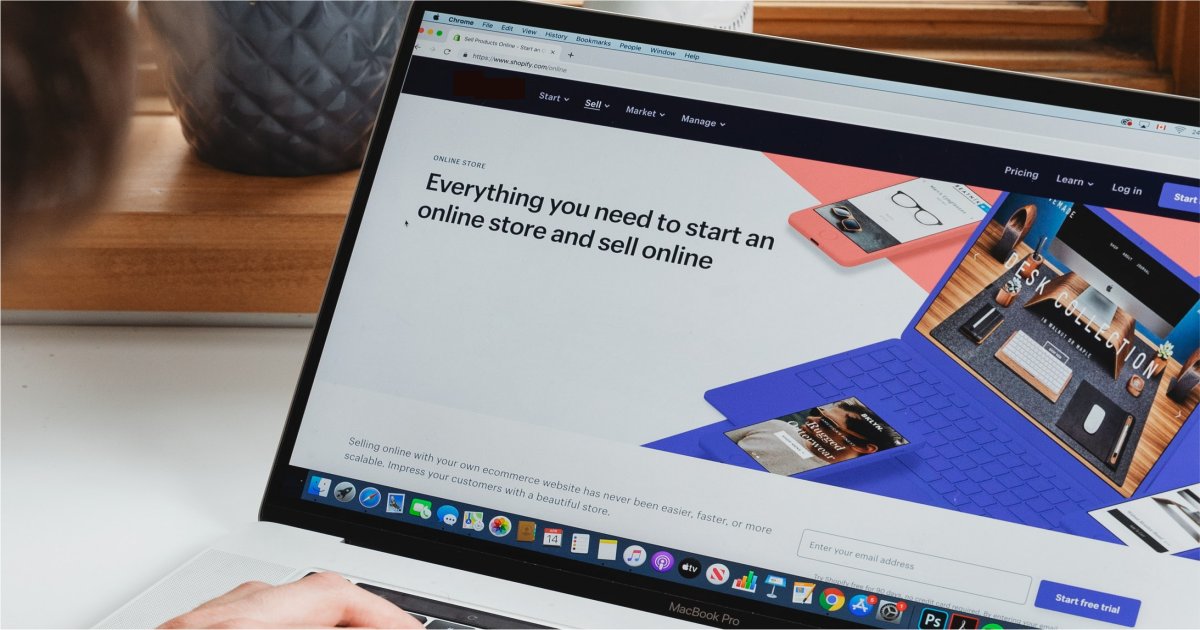
SaaS solutions let you build an online store quickly using a drag-and-drop interface accessible to everyone. The service handles hosting and provides numerous add-ons to enhance your store. If needed, you can delegate store creation to freelancers listed on the platform.
These solutions run on a monthly subscription. One of the most popular, Shopify, starts at around $29 per month.
SaaS is an economical choice when starting out, but if you ever switch providers, you will need to rebuild your store from scratch.
Shopify alternatives include:
- BigCommerce
- Squarespace
- Wix
Building a Custom Online Store
Having a fully customized online store built by a web agency is the best option if you have a budget of a few thousand euros. Your developer can use a CMS such as WooCommerce or PrestaShop to keep development costs down.
Building an e-commerce site on a CMS also gives you access to hundreds of free or paid extensions that add new features at minimal cost.
For hosting, you can either delegate that task to your web agency or choose your own provider.
Building an e-commerce site with a professional means you remain the sole owner of your store. If you ever have a disagreement with your developer, you can easily bring in a new one.
Precautions When Working With a Developer
If you work with a developer, make sure you retain control over your site — in particular the ability to update it without going through them. All CMS-based e-commerce sites include an admin area that requires no coding knowledge. You can ask your developer for a quick training session on the admin panel at delivery.
Watch out for copyright. The design of a website and all elements contributing to it are recognized as intellectual works protected by copyright. This means your developer holds the intellectual property rights unless otherwise specified in the contract. Make sure the contract includes a clause transferring all copyright to you, for the entire site and for an unlimited duration.
Accounting Rules
If you built your e-commerce site yourself, development and production costs can be recorded as an asset on your company's balance sheet.
If you hired a developer, the site is a fixed intangible asset of your business. Costs must be recorded in an intangible assets account and amortized over a period not exceeding five years, unless you opt for exceptional amortization over twelve months.
If you use a SaaS solution, subscriptions and commissions on sales are considered deductible business expenses.
Your Domain Name
Every website is identified by a unique name. Your domain name should be short and easy to remember.
You can register a domain name through a registrar or via your hosting provider. For an online store targeting a French market, registering with a .fr extension is recommended. For an international market, .com is preferred.
Make sure you are the sole contact associated with your domain name, especially if you have delegated registration to your host or agency. If you are not listed as the registrant, the domain does not truly belong to you, and your provider could charge you to get it back.
Data Protection
E-commerce sites collect customer data and must comply with applicable data protection regulations. Your store will also set cookies on visitors' devices — you must obtain their consent, provide a way to refuse cookies, and inform them of their purpose.
Legal Notices
Mandatory legal notices must include:
- Company name and legal form
- Registered address
- Share capital (for companies)
- Name and address (for sole traders)
- Email address and phone number
- Name of the publication director
- Company registration number
- VAT number
- Hosting provider details
Terms and Conditions of Sale
A dedicated page must cover:
- Currency used
- Prices including or excluding VAT
- Shipping costs
- Payment methods
- Refund and withdrawal policy
- Legal warranty
Payment Solutions
Credit cards are the most popular payment method, but other methods are appreciated internationally. You can also offer PayPal or use an all-in-one payment platform like Stripe.
Measuring Your E-Commerce Traffic
AFS Analytics is a web analytics tool specifically designed for online stores. You can install it yourself or ask your developer to do it. Installation is straightforward thanks to plugins for WooCommerce, PrestaShop, and Shopify.
Conclusion
Creating an e-commerce site is a smart way to expand your customer base and secure the future of your business. Don't wait — get started today.